Pain is temporary, failure lasts forever

Lean, agile living for the running mother of Peter

2009-01-16

Corporate visions?

This Wednesday I started my new position at TUI Nordic and since then I've been busy getting busy at my new job. It's interesting to finally be working at a company which focuses on a real corporate vision and related strategies. Just after three days, I know the vision and strategy from the heart and this colors how I view the projects I'm getting involved in.

I've earlier discussed the importance of a product vision and a project vision before starting an agile project. But I think the corporate vision is the way to start. From the corporate vision, product and project can be set.

I'm also really excited about working in an organisation actively working with lean values.

I guess this is it for now. Time for rest, but I'll get back to you. From next week I starting to publish the material from my booklet on product ownership in scrum project.

Labels: , ,

2009-01-08

Do you have a Collyer?


The term Collyer is used for an area packed with junk, trash and belongings. The term come from a pair of brothers whose house had to relieved from approximately 103 tons of garbage upon their death. The trash consisted everything from dead horses to abandoned trash from the neighbours. One of the brothers had been dead for two years but the surviving brother had kept his body in the house. And now it's happened again, a man digging tunnels through his garbage got lost and died in England.

One wonders how it got started. I don't think the man in England decided that he was going to gather so much junk that he could make tunnels in it. I think it started in a habit common to many. "I don't know how I'm going to use this but I'll just hang on to it and it will perhaps come to good use sometimes." Another (often combined situation) is when someone is like the birds in Find Nemo: "Mine mine mine." For some, having is not as important as others not having. And then this is repeated over and over again. And suddenly you cannot do anything because all you do is dig through the garbage.

Lean Software and agile development identifies this as one of the most important problems in software development. If you look at you project or your development environment as the Collyer house you probably have those routines and documents that you really don't see how you're going to use but you think can be handy. Right.

This does not mean that you should only have things you need right here and now. There are things like insurance and fire indicators which have a value even when they are not used. But then you know that there is a calculated risk and the consequences if the unfortunate happens. But no one will die because you didn't keep that broken umbrella.

(Thanks to my friends at VoF for supplying with details on the Collyer family.)

Labels: , ,

2009-01-07

Suggestion for a new year's resolution!

Yes, I know that New year's has passed but it is still time for a new year's resolution from Kevin Rutherford

In your current job, can you identify:

  1. Five regular activities that contribute value towards your organisation’s goal?
  2. Five regular activities that do not contribute value towards the goal?
Something we all can do and probably should. Perhaps it's easier than quitting smoking or exercising more.

Labels: ,

2008-10-14

Lean software development

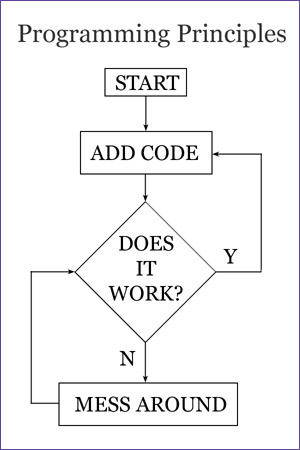
My favorite guy from the backside of Sweden, the Hexmaster of Faktoider.nu, posted this picture today.

He posted it tagged as something funny and as a joke, but it actually catches the principles of Lean Software Development in the best way I've seen until now: do not add functionality until you've gotten the the stuff you've already to work.

Then, if you want to call fix defects "mess around" is probably another question.

Labels: